
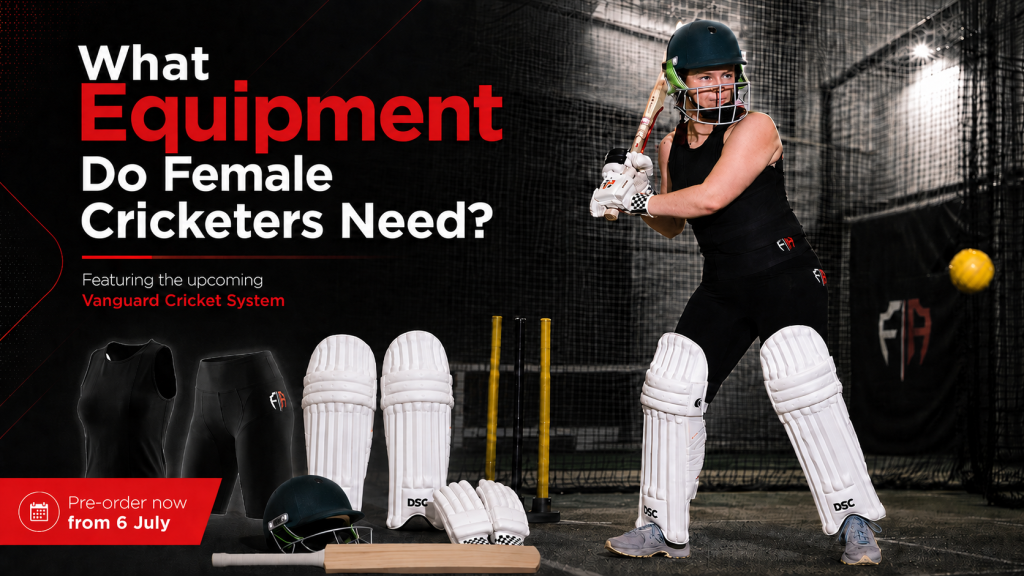
What Equipment Do Female Cricketers Need?
Cricket has changed. Female players are faster, stronger, more competitive, and playing at higher levels than ever before. From junior girls stepping into their first season to elite women facing serious pace bowling, the equipment they wear matters. It is not just about looking the part. It is about confidence, movement, protection, and performance.
For too long, female cricketers have been expected to make do with gear designed around male bodies. Oversized pads, uncomfortable thigh guards, chest protectors that shift around, and bulky equipment can all affect how a player moves, bats, fields, and performs under pressure.
The right cricket equipment should protect without getting in the way. It should fit properly, stay in place, and support the way female athletes actually move.
So, what equipment do female cricketers actually need?
1. A Proper Cricket Helmet
A cricket helmet is one of the most important pieces of protective equipment for any batter, wicketkeeper standing up to the stumps, or close-in fielder. It protects the head and face from ball impact, particularly against fast bowling, unpredictable bounce, or deflections.
Female players should look for a helmet that fits securely without moving around. A poor-fitting helmet can become dangerous because it may shift during play. The grill should sit correctly over the face, and the helmet should feel stable when running, turning, or playing shots.
Junior players especially need regular helmet checks because they grow quickly. A helmet that fitted last season may no longer provide the right protection this season.
2. Batting Gloves
Batting gloves protect the fingers, knuckles, and hands from ball impact. They also help with grip and comfort during long innings.
Female cricketers should choose gloves that fit properly across the palm and fingers. Gloves that are too big can reduce bat control, while gloves that are too tight can restrict movement. The best gloves offer a balance of protection, flexibility, and feel.
For younger players or players facing slower bowling, basic protection may be suitable. But as bowling speed increases, better-quality gloves become more important.
3. Batting Pads
Batting pads protect the shins, knees, and lower legs. They should be comfortable enough to run in and secure enough not to twist while batting.
One of the biggest problems for female players is that many pads are too wide, too heavy, or not shaped well for their body. Poorly fitting pads can make running between wickets harder and can interfere with footwork.
When choosing batting pads, female cricketers should check that the knee roll sits in the correct place, the straps hold the pad securely, and the pad does not feel bulky or awkward. A player should be able to move, sprint, and play shots without feeling restricted.
4. Abdominal Guard
An abdominal guard, sometimes called a box or protector, is important for lower-body protection. Female-specific abdominal guards are available and should be considered for batters and wicketkeepers.
This is one of those items many players avoid talking about, but that is a mistake. Impact injuries in this area can be painful and serious. The guard should fit securely inside suitable underwear or compression shorts and should not move around during play.
5. Thigh Protection
Thigh guards are especially important for batters facing pace bowling. Balls hitting the upper leg can cause painful bruising and can affect performance, confidence, and recovery.
Traditional thigh guards often create problems for female cricketers. They can be bulky, slide out of position, or sit awkwardly because they were not designed around the female shape. Some players remove them because they feel uncomfortable, which means they are choosing mobility over protection.
That should not be the choice.
This is one of the areas Fempro Armour is addressing with the upcoming Vanguard Cricket System, officially launching on 6 July. The Vanguard Cricket Pants are being developed with integrated thigh protection, including inner and main thigh coverage. Instead of relying on loose, separate guards that move around, the protection is built into the garment structure to help keep the armour stable while allowing the player to move naturally.
The goal is simple: protection that stays where it needs to be.
6. Chest Protection
Chest protection is one of the most overlooked areas in cricket, especially for female players. Yet the chest and breast area are exposed to direct ball impact when batting, fielding close, wicketkeeping, or during unpredictable deflections.
Many female players either wear no chest protection or wear gear that is uncomfortable, bulky, or designed as an afterthought. That is not good enough.
Female-specific chest protection should consider breast tissue, body shape, movement, comfort, and stability. It should protect the player without restricting breathing, rotation, running, or shot execution.
The Vanguard Cricket Vest has been designed to help solve this problem. It integrates chest armour into a fitted vest system so the protective plate can sit securely against the body. This matters because armour that moves away from the impact zone cannot do its job properly. Protection needs to stay in place when a player runs, twists, dives, bats, and fields.
Cricket has advanced in so many areas, but female-specific impact protection is still behind. That gap needs to close.
7. Tested Impact Protection
Not all protective gear is created equal. Looking protective and being properly tested are two very different things.
Fempro Armour’s cricket protection has been tested against serious impact standards, using a 50 Joule impact test method commonly used in European motorcycle protection testing. In testing, Fempro Armour’s cricket armour recorded approximately 15 kN residual force transfer.
To put that into perspective, comparative testing showed other cricket protection products transferring significantly higher force, with Remfry-style protection around 25–29 kN and Gray-Nicolls-style protection around 40 kN.
That matters because the lower the residual force transferred through the armour, the less impact energy reaches the body. Cricket may not yet have a dedicated body armour standard like motorcycling does, but female cricketers still deserve to know what they are wearing, how it has been tested, and how much force may still be going into their body.
Pretty padding is not enough. Tested protection matters.
8. Wicketkeeping Gear
Female wicketkeepers need gloves, inner gloves, pads, helmet protection when standing up, and suitable body protection depending on the level of play.
Wicketkeeping pads should allow quick movement, squatting, diving, and fast footwork. If pads are too bulky, they can slow reaction time. Wicketkeepers also take repeated knocks from balls, deflections, and awkward rebounds, so comfort and protection both matter.
Fempro Armour is also developing cricket pad clads designed to go over existing wicketkeeping pads. These covers allow players and teams to transform white pads into coloured leg guards quickly, using lightweight, durable, easy-to-clean fabric. They are designed to fit securely over existing pads without affecting performance.
This gives clubs and players a practical way to match team colours without needing to replace perfectly good pads.
9. Cricket Shoes
Cricket shoes should match the surface and role of the player. Batters and fast bowlers often need strong grip and support. Spin bowlers, fielders, and wicketkeepers may prefer lighter shoes with flexibility.
The wrong shoes can increase the risk of slips, poor balance, and unnecessary strain. Female players should look for shoes that fit properly, support the ankle and arch, and suit the type of pitch they play on.
10. Compression Wear and Base Layers
Good base layers help with comfort, sweat management, and reducing friction under protective equipment. For female players, compression shorts, leggings, and fitted tops can help keep guards in place and reduce irritation.
This is especially important in hot Australian conditions where players need gear that performs without becoming heavy, sticky, or uncomfortable.
11. The Right Cricket Bag
A cricket bag may seem basic, but once a player has a bat, helmet, pads, gloves, shoes, thigh protection, chest protection, water bottle, and team gear, organisation matters.
A good bag should have enough room, separate compartments, and be easy to transport. Younger players may need a wheelie bag, while older players may prefer a duffle style.
Why Female-Specific Cricket Gear Matters
The problem is not that female cricketers do not have access to equipment. The problem is that much of the available equipment was never properly designed for them.
When gear does not fit, players adjust their technique, remove protection, or accept discomfort as normal. That is not performance. That is compromise.
Female cricketers deserve equipment that works with their bodies, not against them. Protective gear should help a player feel confident walking out to bat, facing faster bowling, fielding closer to the wicket, or stepping into a higher level of competition.
At Fempro Armour, we believe protection should be designed around the athlete, the impact zone, and the way the body actually moves. Our upcoming Vanguard Cricket System, including the Vanguard Cricket Vest and Vanguard Cricket Pants, has been created to help female cricketers play with better protection, better comfort, and better confidence.
The future of women’s cricket should not be built on hand-me-down design. It should be built on equipment made for the players who are changing the game.
Final Checklist: Female Cricket Equipment
Female cricketers should consider:
Helmet
Batting gloves
Batting pads
Abdominal guard
Thigh protection
Chest protection
Tested impact protection
Cricket shoes
Compression wear
Wicketkeeping gear, if required
Cricket bag
Team-coloured pad clads, if needed
The right equipment does not just protect the body. It protects confidence, performance, and the love of the game.
The Fempro Armour Vanguard Cricket System officially launches on 6 July. Pre-order now and be part of the next step in female-specific cricket protection.