
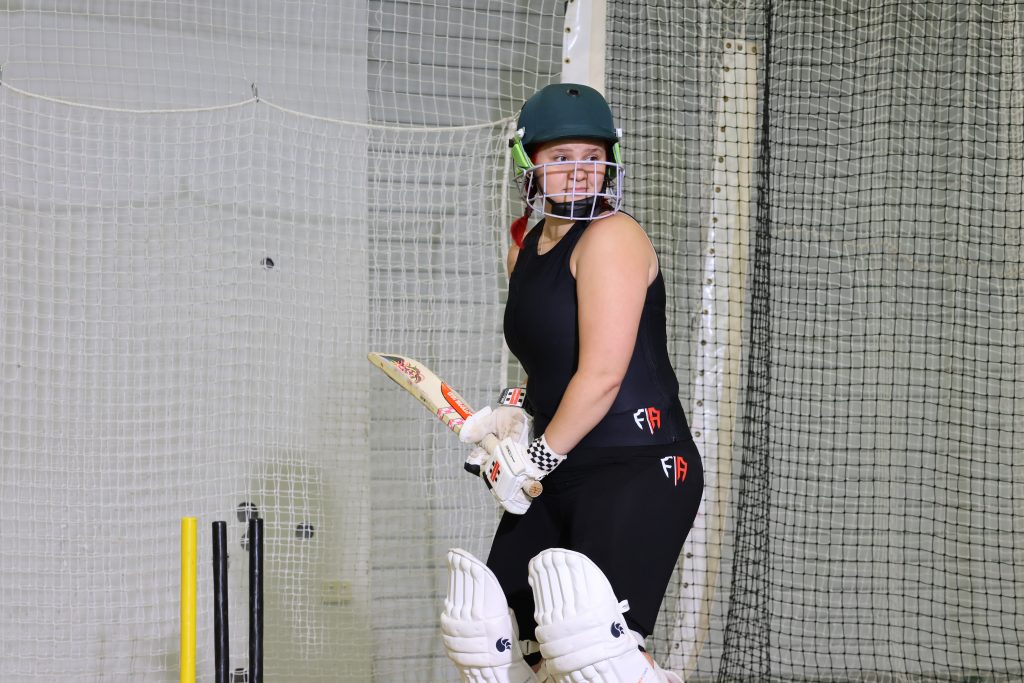
How to protect your legs when playing cricket?
When most people think about protecting their legs in cricket, they immediately picture the large batting pads covering the shins and knees. Those pads are essential, but they only protect part of the leg.
A cricket ball can also strike the upper leg, including the main thigh and inner thigh. These areas contain large muscles but very little natural protection against a hard ball travelling at speed. A direct impact can cause significant pain, bruising, swelling and hesitation when facing fast bowling.
That is why thigh protection should not be treated as an optional extra. Players, parents, coaches and clubs need to understand what each protector covers, how it stays in place and whether there is evidence behind its performance.
What Protects the Upper Legs in Cricket?
Batters generally use two types of upper-leg protection:
Main thigh protection covers the front and outside of the leading thigh. This is one of the areas most exposed when a batter is struck by a short or rising delivery.
Inner thigh protection covers the inside of the opposite leg. Although it may receive less attention, an impact to this area can be extremely painful.
The side requiring each protector depends on whether the player bats right- or left-handed. This is why thigh protection should be selected for the batter’s stance rather than purchased as a generic, one-position product.
Some systems combine both protectors into one strapped unit. Others use separate pads. Fempro Armour integrates the main and inner-thigh protectors directly into fitted performance pants.
How Traditional Thigh Guards Work
Traditional cricket thigh guards generally use layers of foam inside a fabric or synthetic outer shell. They are secured around the waist and legs using elastic or hook-and-loop straps.
Several established cricket brands offer these systems. Gray-Nicolls, for example, sells strapped all-in-one systems combining main and inner-thigh protection and promotes features such as adjustability, flexibility and breathable coverings.
These products may provide useful coverage, but the traditional attachment system can create practical problems for some players.
Straps may dig into the body, loosen during play or feel restrictive beneath cricket trousers. The guard can rotate or shift while the player runs, bends or changes direction. A pad that moves away from the intended impact zone may not provide the coverage the player expects when the ball arrives.
Bulk is another issue. Traditional guards commonly measure approximately 16–25 mm thick. Once they are positioned beneath cricket trousers, the combined layers can feel heavy or restrictive.
This does not mean every traditional thigh guard is poor quality. It means players should look beyond the brand name and determine whether the product fits their body, remains correctly positioned and provides enough information about its protective performance.
Why Fit and Position Matter
Impact material only works where it is positioned.
A high-quality pad that rotates away from the exposed area can leave part of the thigh unprotected. An oversized guard may interfere with running, while an undersized guard may fail to cover enough of the leg.
This is particularly relevant for female cricketers, who have often had to use equipment developed around male body shapes and proportions.
Correct thigh protection should:
- Cover the intended main and inner-thigh areas
- Remain stable when running and batting
- Allow the player to bend and rotate freely
- Avoid excessive pressure from straps
- Fit comfortably beneath cricket trousers
- Match the player’s right- or left-handed batting stance
Comfort is not separate from protection. A player who finds a guard uncomfortable may adjust it incorrectly, remove it during training or stop wearing it altogether.
The Fempro Vanguard Integrated Thigh Armour System
The Fempro Armour Vanguard Integrated Thigh Armour System was designed specifically for female cricketers.
Instead of attaching separate pads with external straps, the system places the main and inner-thigh armour inside dedicated pockets built into fitted performance pants. The pants hold the armour close to the body and help maintain its position while the player runs, bats and moves between the wickets.
The system is available in configurations for right- and left-handed batters, ensuring that the main and inner-thigh protectors are positioned on the appropriate legs.
The armour is approximately 10 mm thick, creating a lower-profile option compared with many traditional strapped systems that commonly measure around 16–25 mm.
The result is less bulk beneath cricket trousers, no external thigh straps and a more integrated fit.
The armour can also be removed from the pants, allowing the garment and protective components to be handled appropriately when cleaning or replacing parts.
What Does the Testing Tell You?
Words such as “elite”, “advanced”, “high impact” and “maximum protection” are common across sporting equipment. They sound strong, but they do not tell customers how a product was tested or how much force passed through it.
Fempro Armour’s cricket protection was independently tested using a 50-joule motorcycle-derived impact protocol. Under that testing configuration, the armour transmitted approximately 15 kN.
Joules measure the energy applied during the impact. Kilonewtons, or kN, measure the force transmitted through the protector toward the body. For transmitted force, a lower result generally indicates that less force passed through the armour during that specific test.
However, test results should only be directly compared when the products are tested using the same energy, impactor, anvil, conditioning and laboratory procedure.
The Fempro result should not be presented as a direct comparison with a product tested under a different cricket standard or a different laboratory method. The value of publishing the result is transparency: customers can see the test energy, the testing basis and the measured transmitted force behind the claim.
Many cricket brands provide detailed descriptions of their materials, fit, comfort and protection levels. However, their individual thigh-guard product pages do not always disclose the test energy, transmitted-force result or full test conditions.
That does not prove those products are ineffective. It simply leaves the customer with less measurable information when trying to compare protection.
What Should Players and Parents Look For?
Players should test whether their thigh protection remains in the correct position while running, bending and playing shots—not only while standing still.
Parents buying for junior players should check the size, coverage and batting-hand configuration rather than purchasing oversized protection for the child to “grow into”.
Coaches should encourage players to train in the same protection they will wear during matches. This exposes movement, fit or stability problems before the player faces competition bowling.
Clubs should also treat female-specific protection as part of athlete performance and preparation. Equipment that reduces distraction and stays securely positioned can help a player focus on the delivery rather than worrying about the guard moving.
Protect More Than Your Shins
Batting pads protect the lower legs, but they do not replace main and inner-thigh protection.
The best system is not automatically the thickest, most expensive or most heavily marketed. It is the one that provides the correct coverage, stays in position, allows natural movement and is supported by clear information about how it was tested.
The Fempro Vanguard Integrated Thigh Armour System combines main and inner-thigh protection inside fitted, female-specific performance pants. At approximately 10 mm thick, it offers a lower-profile alternative to traditional strapped thigh guards while removing the straps that can shift or dig into the body.
The Fempro Vanguard cricket protection range is available now for female players, parents, clubs and schools through the main Fempro Armour cricket protection page.