
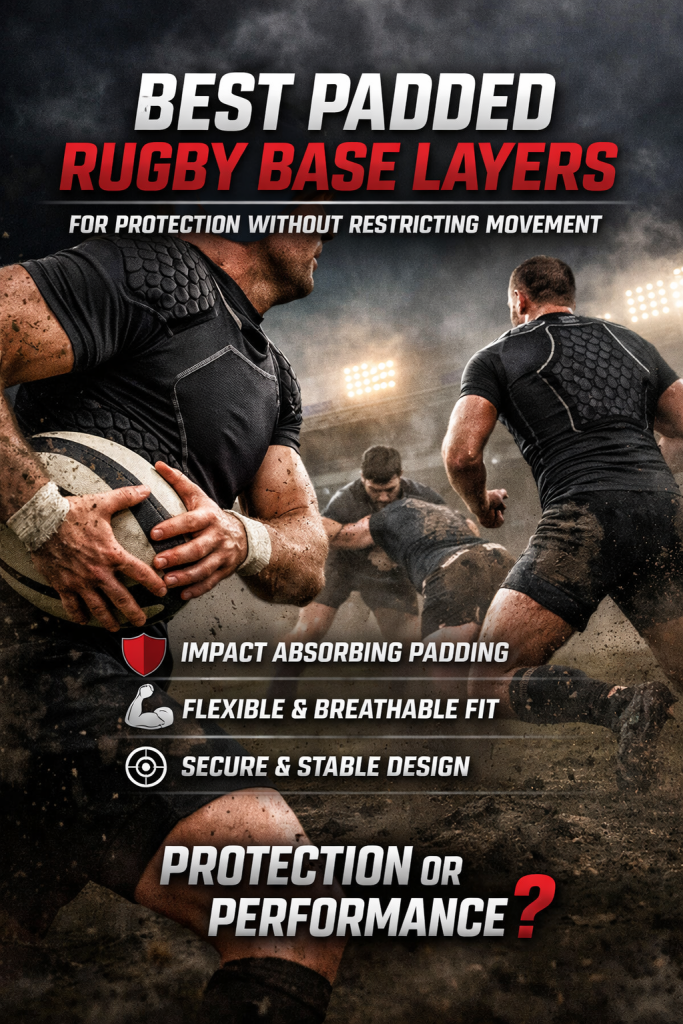
Best Padded Rugby Base Layers for Protection Without Restricting Movement
If you play rugby — whether it’s union, league, grassroots or elite — you already know one thing:
Impact is part of the game.
You expect it. You train for it. You accept it.
But what most players don’t actually stop and think about is how they’re managing that impact — and more importantly, what they’re wearing to deal with it.
Because here’s the reality:
Not all padded rugby base layers are created equal.
And some of what’s currently on the market… isn’t really protecting you at all.
Why Players Wear Padded Base Layers (And Where It Goes Wrong)
Ask most players why they wear padded gear, and you’ll usually hear:
- “For protection”
- “To reduce bruising”
- “Because everyone else wears it”
- “It feels safer”
And that’s fair.
But very few players actually understand what their gear is doing on impact.
A lot of traditional rugby base layers use basic foam padding — the same category of material you could find in packaging or low-grade sports equipment.
Yes, it absorbs some impact.
But the real question is:
How much force is still going through your body?
Because if that force is still high, all you’ve really done is added a layer of comfort — not protection.
Protection vs Performance: The Trade-Off That Shouldn’t Exist
One of the biggest issues in rugby protective gear is the assumption that you have to choose between:
- Protection (bulk, stiffness, restriction or low grade approved gear)
or - Performance (lightweight, flexible, minimal protection)
or - Wear Nothing
So players often go one of two ways:
- Wear bulky padded gear that shifts, overheats, and restricts movement
- Skip protection altogether because it feels better to play without it
And honestly, we see this all the time — especially at higher levels.
Players would rather take the hit than deal with uncomfortable gear.
That’s a problem.
Because protection should never come at the cost of performance.
And performance should never come at the cost of protection.
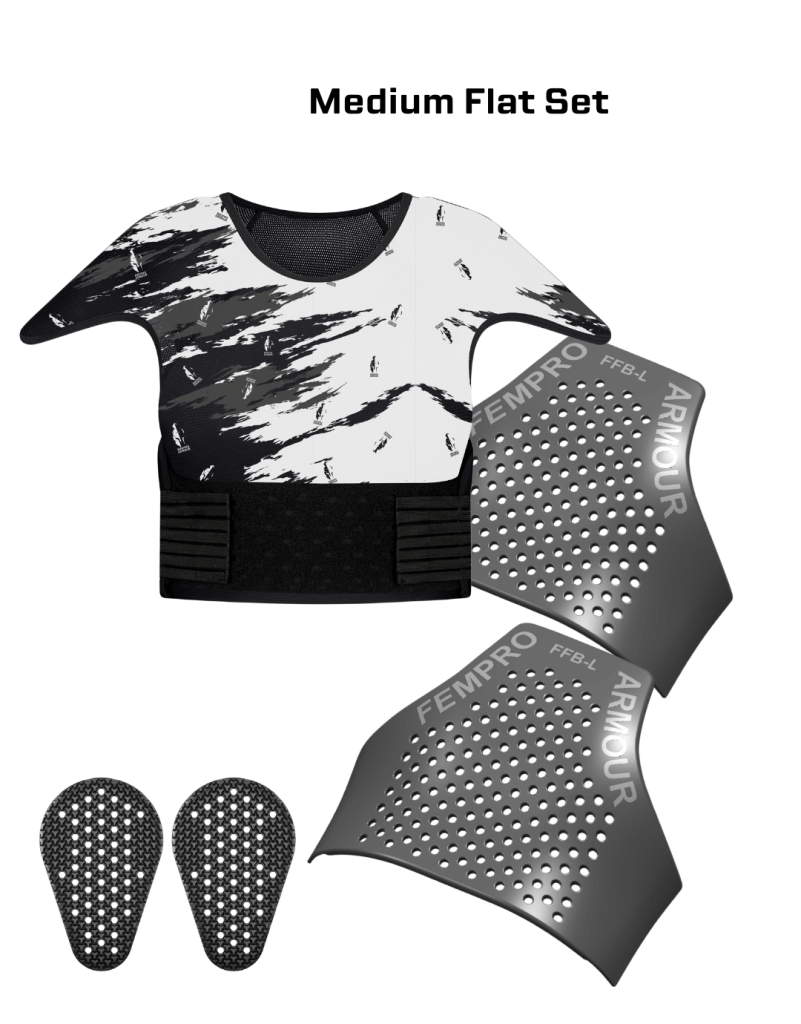
BroGuard Pro Impact Vest
What Actually Makes a Good Padded Rugby Base Layer?
If you strip it back, there are a few key things that actually matter when it comes to impact protection.
-
Impact Absorption vs Force Dispersion
Most basic padding works by absorbing energy.
Better systems do more than that — they disperse and redirect force away from the body.
That’s a big difference.
Because it’s not just about softening the hit — it’s about reducing what your body actually feels.
-
Material Technology
Not all foams are equal.
High-performance protective gear uses advanced materials (like viscoelastic foams) that are:
- Soft and flexible at rest
- Responsive under impact
- Capable of handling higher-speed collisions
These materials are designed for real impact environments — not just low-speed contact.
-
Stability (This Is Where Most Gear Fails)
One of the most overlooked factors is movement of the padding itself.
If your padding shifts during play, it’s no longer protecting the area it’s supposed to.
And that happens a lot with:
- Strap-on pads
- Loose-fitting base layers
- Poorly integrated designs
The moment the gear moves, your protection is compromised.
-
Fit — Especially for Female Athletes
This is a big one.
Most padded rugby base layers on the market are designed as “unisex”.
But unisex isn’t universal.
Female athletes have different anatomical structures — especially through the chest, ribs, and torso.
When gear isn’t designed for that:
- It doesn’t sit correctly
- It shifts more
- It creates pressure points
- It reduces both comfort and protection
And that’s often why players choose not to wear it at all.
-
Breathability & Comfort
If it’s too hot, too heavy, or too restrictive — players won’t wear it.
Simple as that.
The best gear disappears when you play.
You shouldn’t be thinking about it mid-game.
The Reality of What’s on the Market
Let’s be honest here.
A lot of padded rugby base layers are still:
- Bulky
- Basic foam
- Poorly fitted
- Designed as an afterthought
They’re built to look protective — not necessarily to perform at a high level.
And that’s where players get misled.
Because visually, most gear looks the same.
But performance-wise, it’s not even close.
What You Should Be Looking For
If you’re choosing a padded rugby base layer — whether for yourself, your child, or your team — here’s what actually matters:
- Proven impact performance (not just marketing claims)
- Advanced materials designed for sport impact
- Integrated systems (not strap-on padding)
- A stable, body-specific fit
- Lightweight, breathable construction
And most importantly:
👉 Gear that allows you to play exactly how you want to play — without hesitation.
Because This Isn’t Just About Protection
This is the part most people miss.
Good protective gear doesn’t just reduce injury risk.
It changes how you play.
When you trust what you’re wearing:
- You commit harder to tackles
- You hesitate less
- You recover better after impact
- You stay in the game longer
That’s not just safety.
That’s performance.
Final Thought
Rugby is always going to be a physical game.
You can’t remove the hits.
But you can control how your body experiences them.
And that comes down to what you choose to wear.
So next time you put on padded gear, ask yourself:
Is this actually protecting me… or just giving me the illusion of protection?
Because there’s a big difference.
And once you understand that — you’ll never look at protective gear the same way again